• National grid loses 1,000MW as strike cuts gas supply
• Umahi urges oil workers to prioritise national interest
• NECA, MAN condemn refinery dispute
The standoff between the Dangote Refinery and the Petroleum and Natural Gas Senior Staff Association of Nigeria (PENGASSAN) ended on Wednesday after marathon negotiations mediated by federal authorities.
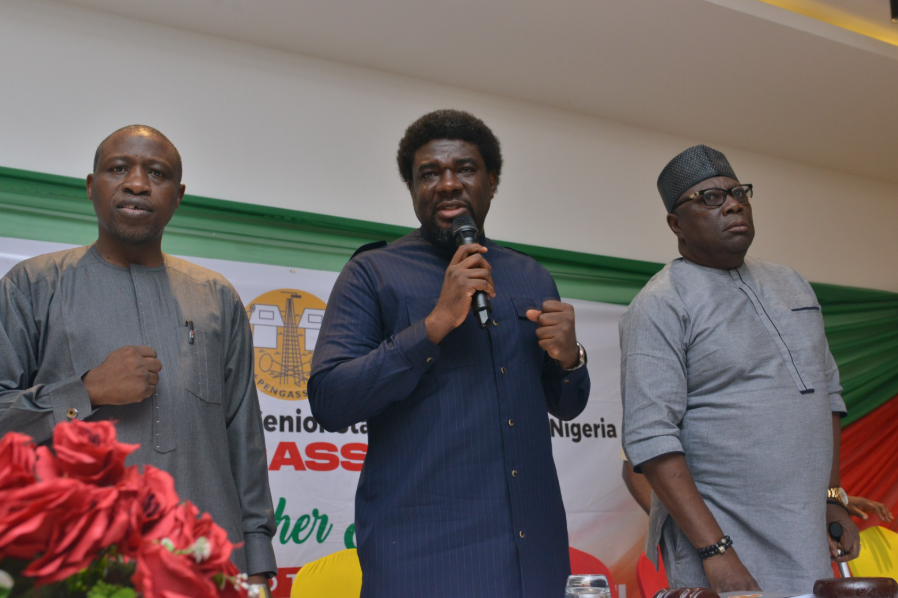
Under the agreement, the union agreed to suspend its strike action immediately, while the refinery pledged to reinstate sacked workers. However, the employees will be redeployed to other companies within the Dangote Group.
Federal Intervention
The conciliation meeting was attended by top officials, including National Security Adviser Nuhu Ribadu; Minister of Labour and Employment Maigari Dingyadi; Finance Minister Wale Edun; Budget and Economic Planning Minister Abubakar Bagudu; Minister of State for Labour; DSS Director General Oluwatosin Ajayi; NIA DG Mohammed Mohammed; and the Ministry of Petroleum Resources. Also present were heads of the NMDPRA, NUPRC, and representatives of the NNPC.
The top management of Dangote Group, leaders of the Trade Union Congress (TUC), and senior officials of PENGASSAN were also at the talks.
A communiqué signed by Labour Minister Dingyadi confirmed that the strike, which had cut gas supply to the $20 billion refinery, was triggered by the dismissal of over 800 workers.
“Whereas the leadership of PENGASSAN said that the directives given to stop the supply of gas to Dangote Petroleum and withdrawal of services was in response to the termination of appointment of over 800 members of PENGASSAN by the management of the Dangote Refinery and Petrochemical Limited, the management of Dangote Refinery and Petrochemical on the other hand, explained the reason for disengagement of the workers was as a result of the ongoing reorganisation in the company,” the communiqué stated.
Resolutions Reached
According to the communiqué:
- Unionisation was reaffirmed as a right of workers under Nigerian law.
- Dangote Group agreed to redeploy the disengaged workers to other companies within the group with no loss of pay.
- No worker will be victimised for their role in the dispute.
- PENGASSAN committed to beginning the process of calling off the strike.
“Both parties agreed to this understanding in good faith,” the communiqué added.
Wider Impact of the Strike
The strike had disrupted national electricity supply, cutting generation by about 1,000MW due to gas shortages. The Nigerian Independent System Operator (NISO) confirmed that output fell from over 4,300MW on Sunday to about 3,200MW at the lowest point.
“NISO wishes to notify the public of recent major generation shortfalls on the national grid, caused by industrial actions of the Petroleum and Natural Gas Senior Staff Association of Nigeria (PENGASSAN) within the gas supply chain,” the operator said.
It added that contingency measures, including hydropower optimisation and selective load shedding, helped avert a total blackout.
Industry Reactions
The dispute drew sharp criticism from business and government leaders.
Director General of the Manufacturers Association of Nigeria (MAN), Segun Ajayi, described the conflict as “unconscionable” and a threat to investor confidence.
“No investor would commit billions of dollars to build a factory only to see it decimated by industrial disputes,” Ajayi said on Arise Television. He urged government intervention, stressing: “You cannot shut down an economy and you cannot disincentivise private sector investment. Because everyone is watching. How will anyone who sees what has been done to Dangote now want to come into this country and invest big?”
Similarly, Minister of Works David Umahi appealed to PENGASSAN to consider national interest, warning that any strike at this period would undermine Nigeria’s fragile economic recovery.
NECA’s Position
The Nigeria Employers’ Consultative Association (NECA) also condemned the escalation. Its DG, Adewale-Smatt Oyerinde, described PENGASSAN’s actions as “economic sabotage” with grave implications.
“One acceptable characteristic of the labour and industrial relations ecosystem is the inherent nature of conflict, and also inherently built are frameworks to address it whenever it occurs. However, reckless actions that undermine lawful dispute resolution mechanisms, cripple enterprises, or jeopardise national assets are not acceptable globally under any known labour practice. Nigeria cannot be an exception,” Oyerinde said.
He stressed that institutions like the Industrial Arbitration Panel (IAP) and the National Industrial Court (NICN) exist to handle such disputes.
Background
PENGASSAN had begun its industrial action on Monday, directing members in major oil and gas companies including TotalEnergies, Chevron, Seplat, Shell Nigeria Gas, Oando, and the Nigerian Gas Infrastructure Company (NGIC) to halt crude oil and gas supplies to Dangote Refinery. The move followed the dismissal of over 800 workers, which the union claimed was retaliation for their decision to unionise.