“If you finish your homework, you can have ice cream.” Almost every parent has said something like it. And it works, for about a week. Then the price goes up. Now it’s two scoops, or an hour of video games, or nothing gets done at all.
That’s the problem with bribes. But rewards themselves aren’t the enemy. Used well, a simple reward system can help children build learning habits, push through tricky work and feel genuinely proud of their progress. The difference is all in how you use them. This guide shows you how to set up a reward system that motivates without turning learning into a transaction.
⚡ The short version
- A bribe is offered before a task to get it done. A reward recognizes effort after it happens.
- Reward effort and habits (showing up, trying, fixing mistakes), not just perfect scores.
- Keep rewards small, free and visible: stars, stickers, a chosen story, extra park time.
- Fade rewards out slowly as the habit and enjoyment grow.
Reward or bribe? What’s the difference?
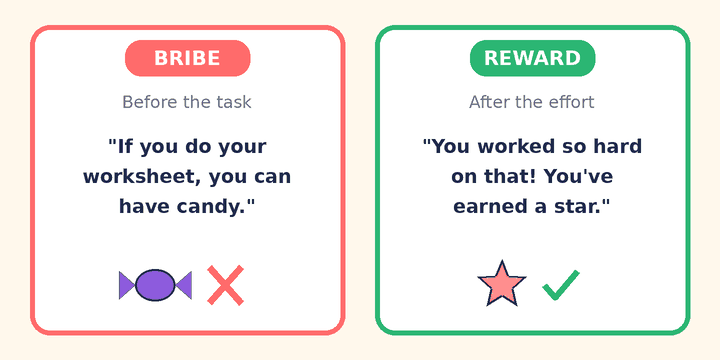
The two can look similar, but they send very different messages. A bribe says: “This task is so unpleasant that I need to pay you to do it.” A reward says: “I noticed your hard work, and I’m proud of you.”
Bribes usually appear in a moment of stress, after a child has already refused. They put the child in charge of negotiating, and the price tends to rise. Rewards are agreed in advance, stay the same, and are given calmly once the effort is made. That predictability is what makes them work.
🤔 Reward or bribe? Tap each card to find outYour child refuses to read, so you offer a cookie to start.
tap to flip
BRIBE. It’s offered mid-refusal to end the standoff. Next time, they’ll wait for the offer.Every day of reading earns a star. Five stars means Friday movie night.
tap to flip
REWARD. It’s agreed in advance, consistent and tied to a habit.”You kept going on that maze even when it was hard. Want to pick tonight’s story?”
tap to flip
REWARD. A surprise, given after the effort, that names exactly what they did well.”Finish this page in two minutes and you can have my phone.”
tap to flip
BRIBE. It rewards speed over learning and makes the screen the real goal.
Why the wrong rewards can backfire
Psychologists have a name for it: the overjustification effect. In a well-known study from the 1970s, preschoolers who were promised a prize for drawing later chose to draw less during free play than children who weren’t promised anything. Once drawing became “work for a prize,” it lost some of its fun.
That doesn’t mean rewards are bad. It means big, expected, material rewards for things children already enjoy can crowd out their natural curiosity. The fix is to keep rewards small, focus them on effort and habits, and use them to get a routine started rather than to keep it going forever.
How to set up a reward system that works
1. Choose one habit to build
Start small. Instead of “do well in school,” pick one clear, daily habit: “15 minutes of reading,” “one math sheet after snack,” or “practice your letter sounds.” A child should always know exactly what earns a star.
Ready-made materials make the habit easy to start. A daily phonics lesson, a short session from Crayonbird’s programmes, or one sheet a day from the Kindergarten, Grade 1 or Grade 2 worksheets gives your child a clear task. Not sure which grade fits? The worksheets by grade page covers several school systems.
2. Make progress visible
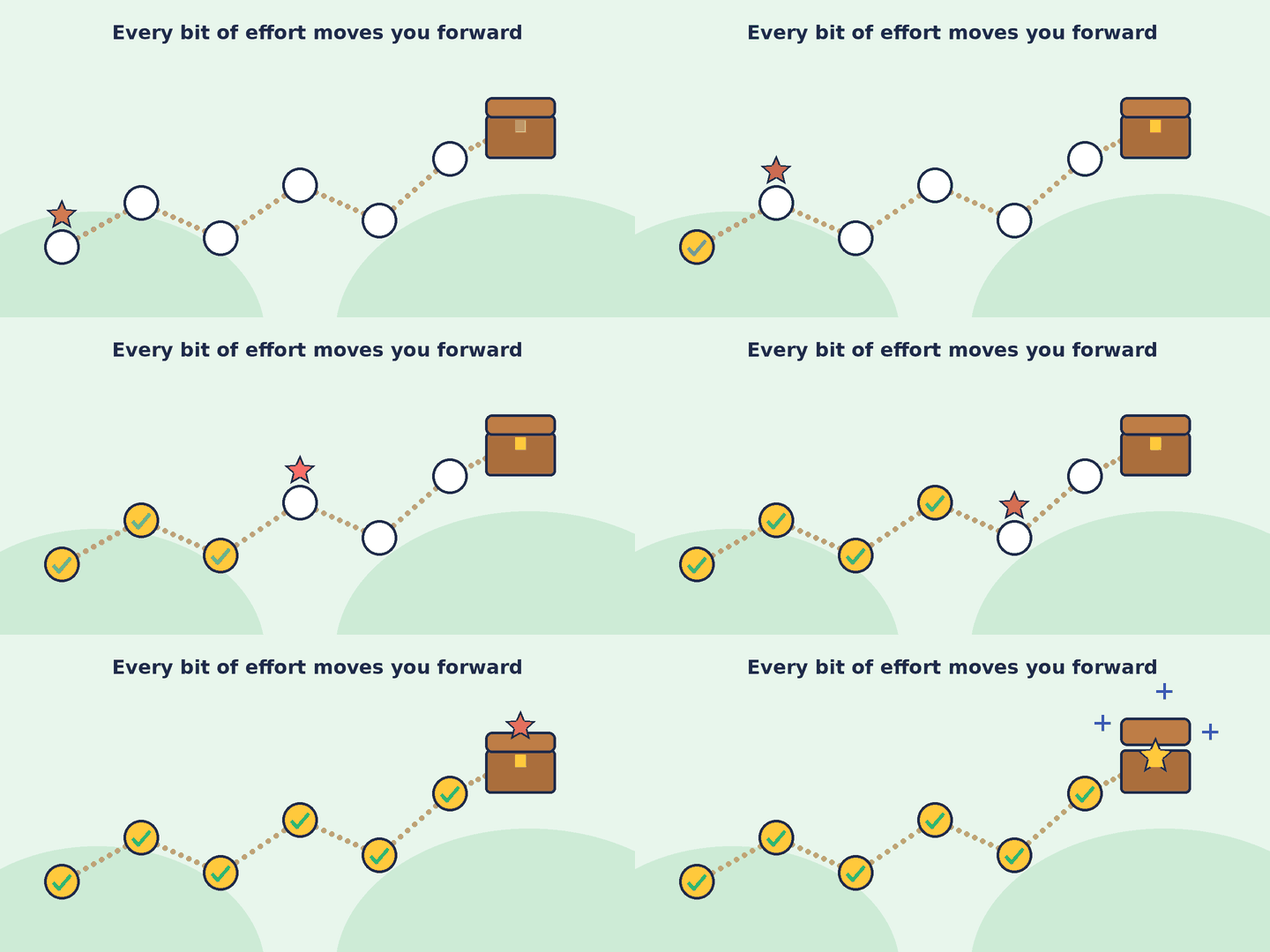
Young children need to see their progress. A sticker chart on the fridge, a jar that fills with marbles, or a printed reading log turns invisible effort into something they can point to proudly. A My Week planner also helps kids see what’s coming and what they’ve already done.
Crayonbird uses the same idea on screen: in the Kids section for ages 6–11, every star earned fills an adventure map and unlocks stickers, while Little Learners (ages 3–5) get big, friendly rewards for tracing and counting. Importantly, those rewards are always earned and never sold. There are no in-app purchases.
3. Reward effort, not just results
If stars only come for perfect scores, children who struggle stop trying. Instead, reward the things that lead to learning: sticking with a hard question, fixing a mistake, or finishing the daily session even on a tired day.
Sheets with instant marking help here. When a child plays a number bonds sheet on screen, wrong answers are flagged straight away with hints, so they can correct them and still earn the star. That teaches them mistakes are part of learning, not a reason to give up.
💬 Swap the praise: tap to see a better phraseInstead of “You’re so smart!”
tap to flip
Try “You worked really hard on that.”Instead of “Good job.”
tap to flip
Try “You found your own mistake and fixed it!”Instead of “Don’t worry, it’s easy.”
tap to flip
Try “This one’s tricky. Let’s figure it out.”
4. Keep rewards small and mostly free
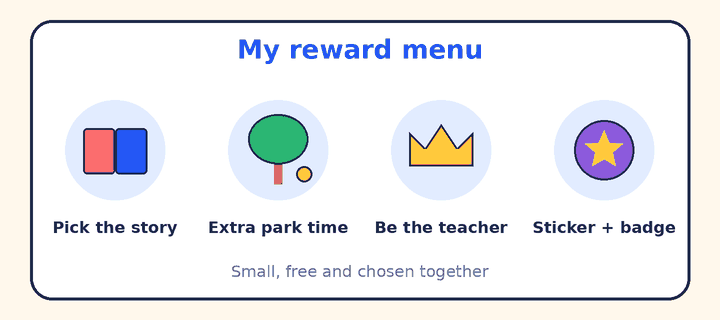
The best rewards cost nothing and bring you closer together. Build a “reward menu” with your child so they feel ownership. Some ideas that work well for ages 4–10:
- Choosing the bedtime story (a printable tale like The Lost Kite or A Picnic on the Moon counts too)
- Writing their own story on the Writing Pad or on big-picture story paper
- Extra time at the park or a family bike ride
- “Be the teacher” and quiz a parent with a homemade quiz
- A special coloring session with a favorite cat coloring page or a digital painting in Studio
- A family game night with Halloween Bingo or another seasonal game
- Picking what’s for dinner on Friday
5. Fade the rewards out slowly
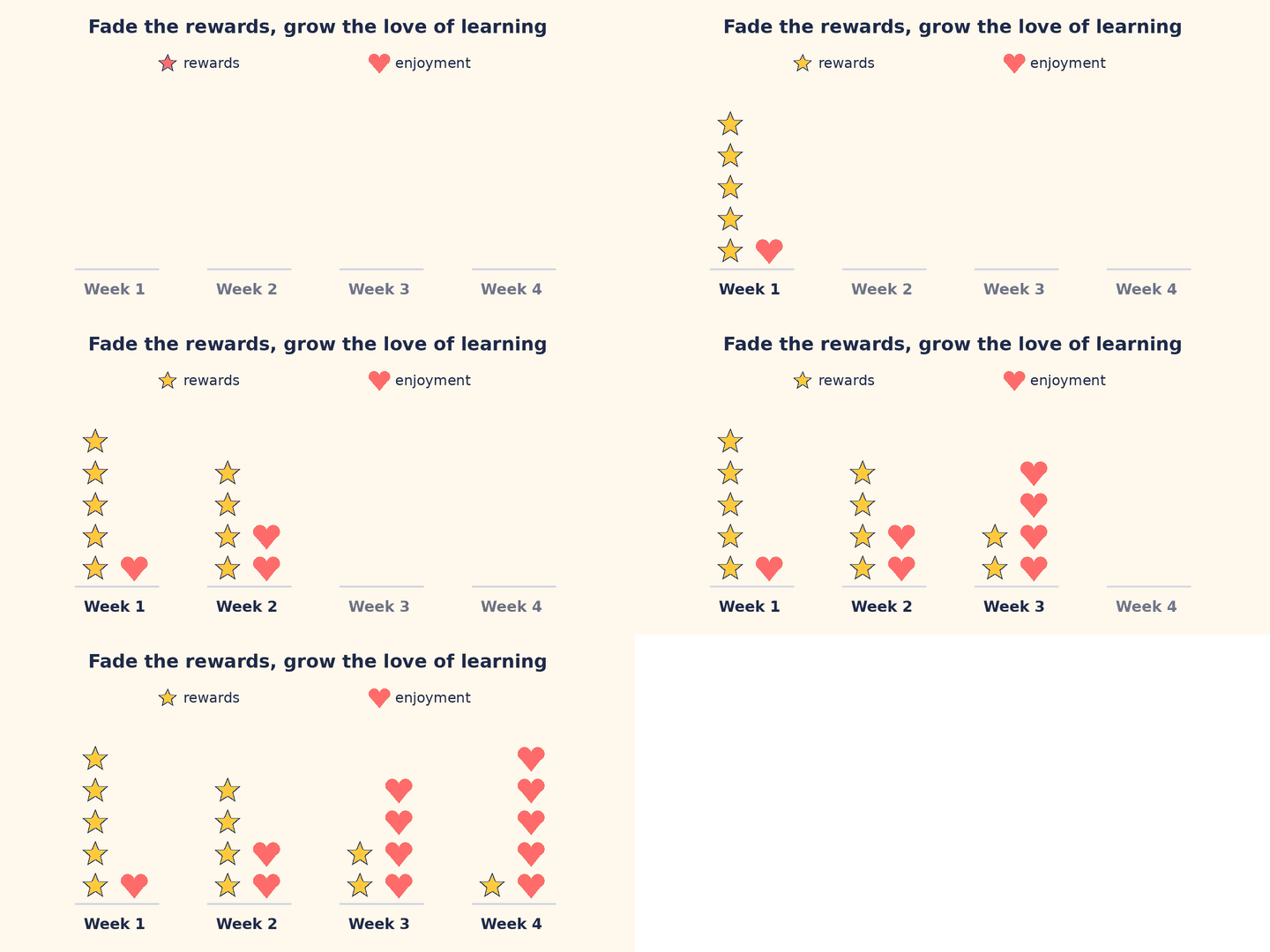
A reward system should be scaffolding, not a permanent building. Once the habit is in place and your child starts to enjoy the activity itself, gradually space out the rewards. Here’s a simple plan:
| Week | How rewards work | What you say |
|---|---|---|
| 1–2 | A star every day; a small treat at five stars | “You did your reading every day!” |
| 3–4 | A star every day; treat at ten stars | “Look how far you’ve come.” |
| 5–6 | Surprise rewards now and then | “That was a great story you picked.” |
| 7+ | Praise and celebration of milestones | “You finished the whole book!” |
Milestones are a great way to keep the celebration alive without daily prizes. Finishing a full pack like My First ABC Tracing Book, Space Mission Maths or the Reading Comprehension Pack deserves a proper “well done.” You could even mark it with a homemade certificate.
What about older kids and teens?
Rewards change as children grow. Stickers lose their magic by about age 10, but the principle stays the same: recognize effort, make progress visible and give them more control. Older kids respond well to choosing their own goals (a book report for every book finished, or mastering the times tables), tracking streaks and earning privileges like a later bedtime on weekends.
Teens in Brainteen (ages 12–18) can set their own targets with study plans, revision flashcards and exam practice. Seeing a topic go from “no idea” to “nailed it” is often the most powerful reward of all.
Common mistakes to avoid
- Taking stars away as punishment. Once earned, a star stays. Removing it teaches kids the system isn’t fair.
- Using screens or sweets as the main reward. They quickly become the real goal, and the learning becomes the obstacle.
- Changing the rules mid-week. Consistency is what builds trust in the system.
- Rewarding everything. If brushing teeth, eating peas and reading all earn prizes, rewards lose their meaning. Focus on one or two habits.
- Making the work too hard. No reward can motivate a child through work that’s well above their level. A quick learning check-up helps you find the right starting point.
✅ Set up your reward system this week
☐ Pick ONE learning habit to build
☐ Agree on what earns a star, together
☐ Print a chart, reading log or week planner
☐ Build a reward menu of small, free treats
☐ Praise the effort, out loud, every day
☐ Plan when you’ll start fading rewards out
Frequently asked questions
Are reward charts good for kids?
Yes, when used to build a specific habit, focused on effort and phased out gradually. They work best as a short-term starter, not a permanent arrangement.What age should you start a reward system?
Simple sticker charts tend to work from around age 3 or 4, once children can link an action to a reward. Keep the steps very short for younger kids: one task, one sticker.Should I pay my child for good grades?
Many experts advise against it, because money can shift the focus from learning to earning. Praise, privileges and shared experiences usually build longer-lasting motivation.What if my child stops caring about the rewards?
That’s often a good sign that the habit is forming. Switch to occasional surprise rewards and celebrate milestones. If they’ve lost interest in learning itself, try new activities, like mazes, drawing lessons or spot-the-difference puzzles, to bring back the fun.
The bottom line
Rewards aren’t bribes when they’re agreed in advance, given for effort, kept small and slowly faded out. Used this way, they help children build the learning habits that eventually become their own reward: the pride of reading a whole book, solving a tricky sum, or finishing a page all by themselves.
Looking for activities to fill that star chart? Explore free worksheets, puzzles and printable books in the Crayonbird library, or browse more tips in the parents’ guide.
About Crayonbird: Crayonbird offers learning sheets, games and art for ages 3–18 in ten languages. Children earn stars, stickers and progress on an adventure map, and every reward is earned, never sold. No ads, no chat and no in-app purchases.